
Author: admin
Businesses need to respond to a variety of factors on a constant basis to remain stable. However this can lead to a myopic vision that overlooks the operational and strategic while overlooking the future and in the worst cases completely ignoring it. One of the fall outs of this type of behavior is the difficulty or complete inability to implement enterprise change at a reasonable pace.
Ability to change has become a necessity given the ever evolving technology, organizations are experiencing the phenomena of having to run in order to stand still. Many smart companies are taking this challenge and using it as a competitive advantage by being able to change faster than their competitors.
Pace and effectiveness of enterprise change is often embedded during project design, analysis and inception. Enterprise projects are complex and complexity requires a holistic approach. Not addressing issues upfront will mean that projects reset mid flight or in the worst cases re-started due issues discovered later in the delivery life cycle.
Main reasons why businesses struggle with delivering technology solutions sustainably are:
- Lack of consistent problem and outcome definition upfront endorsed by all stakeholder groups.
- Design isn’t holistic leaving many stakeholders dissatisfied while some are completely ignored.
- Mismatch between project complexity and business maturity.
- Directional changes while the project is in flight.
- Lack of communication and stakeholder buy in.
Processes are in the background of all company functions whether it be Marketing, Finance or Operations. While critical processes are known and often documented many processes go unnoticed and evolve organically.
Process design and automation is at the heart of digitization and customer experience.
What is Workflow Automation?*
- Workflow automation is a way to streamline manual and paper-based processes often comprised of unstructured tasks involving people, processes, and content. It is used globally by companies to continuously improve efficiency, productivity and integration.
- Related disciplines are BPA (Business Process Automation) and Robot Process Automation (RPA)
- Global standard is BPMN2.0
* Based on IEEE Software Engineering standards and BPMN2.0
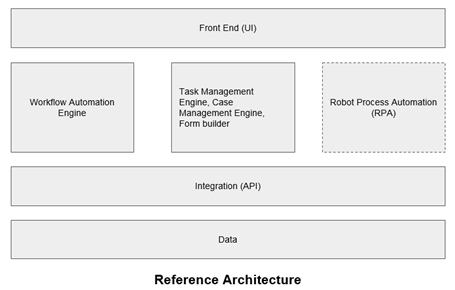
Workflow Automation engines are used by the software industry to develop new products and by many process intensive industries to define, automate, measure and audit processes. Figure 1 shows the Reference Architecture for a Workflow Automation engine.
Process design and re-engineering are key components of your digital transformation journey. Keeping them in focus and under control will ensure successful and sustainable outcomes. Workflow Automation will aid Digitization and enhance Productivity.
Vendors are a critical not only to project success but also for the ongoing sustainability of operations and continuous improvement initiatives.
Unfortunately there is no one size fits all solution and they type of vendor required depends on a variety of factors. It is important to mention that distinction should be made between the product and the vendor. It should also be acknowledged that while product sophistication is generally a good criteria, it is the quality of support provided by the vendor that often determines the project success.
What are the criteria that should be considered while selecting a vendor and product?
Gate openers:
- Product meets the functional and non-functional requirements.
- Sustainability and continuity of support.
Other subjective criteria:
- Costs – licensing, ongoing support and maintenance
- Whether both perpetual and periodic licensing options are available
- Hosting options
- Skills availability
- Total cost of ownership
- Feedback from reference clients
- Product roadmap
- Implementation risk
- Probability of success/ project success factors
- Operating model and operations
Figures 1 and 2 show examples of evidence and data based analysis for comparing the various product and vendor options for one of our recent clients:
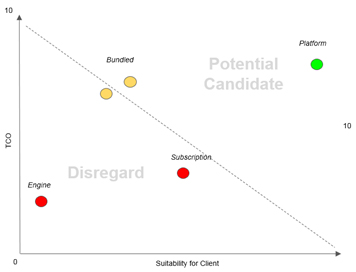
Figure 1 – Vendor Analysis, Strategic Groups
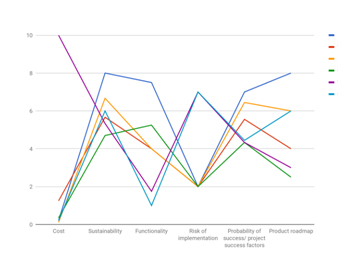
Figure 2 – Critical Success Factors, Value Curve Analysis
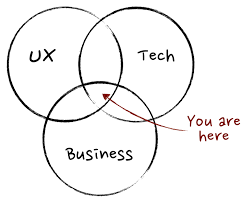
Article by McKinsey quarterly describes the evolving role of the Product Manager. While it is aspirational it could become a reality soon if big data technology becomes easier to consume.
An interesting read regardless.
